Boiler Chemicals
Aqua-SL Boiler Scale & Corrosion Inhibitor
High-efficiency scale and corrosion inhibitor
Our services
Aqua System chemical programs that protect boilers, cooling towers and chiller loops, with ongoing technical follow-up.
Overview
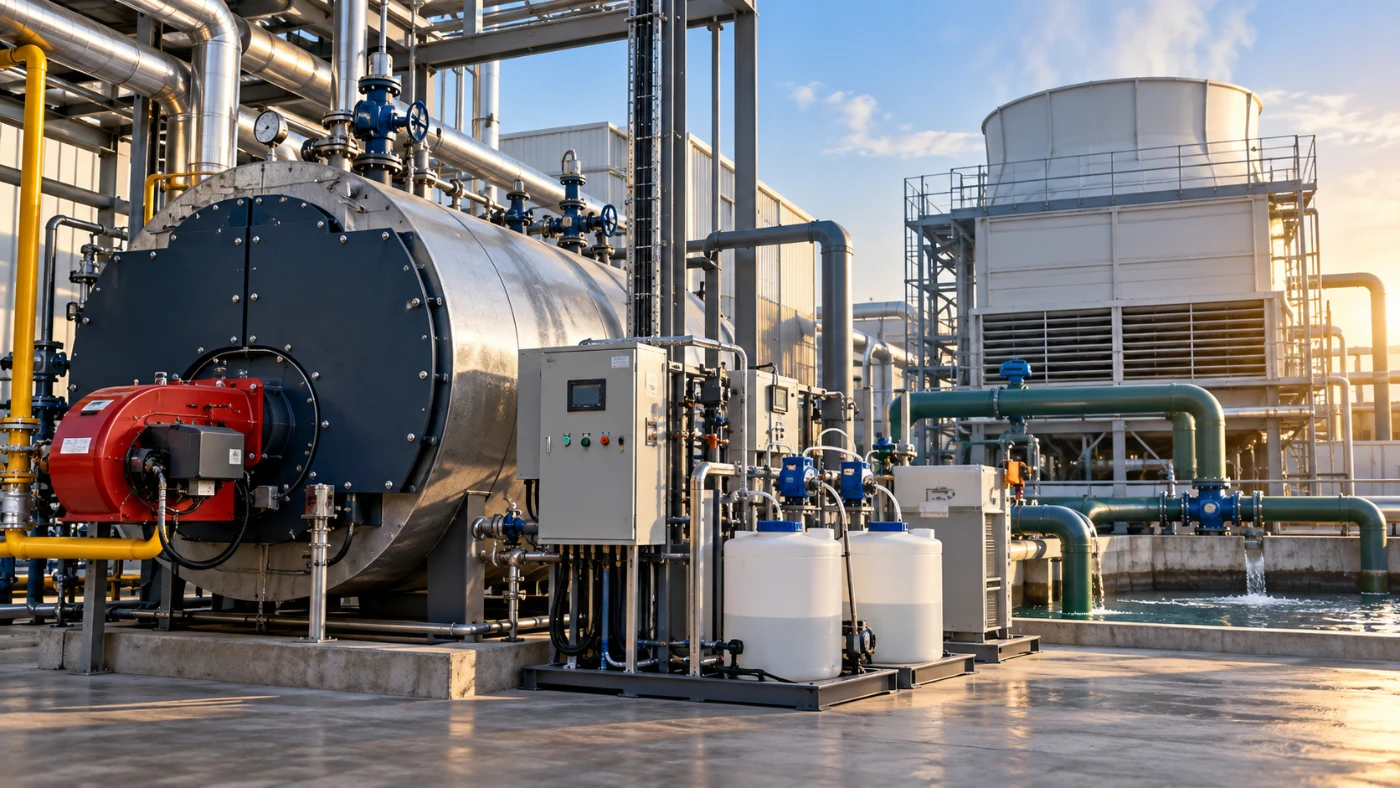
Boilers, cooling towers and chillers are the heart of any plant’s utilities, and the water circulating through them decides their life and efficiency. Scale insulates heat-transfer surfaces, corrosion weakens metal and causes leaks, and biological growth in cooling towers clogs the fill and reduces cooling capacity.
This is Aqua System’s core specialism. We supply and follow up chemical treatment programs for these systems using our own products, and clients in fertilizers, insulation, food, lubricants, pharmaceuticals, plastics, mining and packaging rely on us to protect their boilers, cooling towers and chillers.
A boiler program typically combines a scale and corrosion inhibitor such as Aqua-SL or the polymer-based Aqua-Tn1 and Aqua-Tn2, a condensate pH product that protects steam and return lines such as Aquasteam-N and Aquasteam-F, and dispersants and sludge conditioners that keep deposits in suspension so they leave with the blowdown.
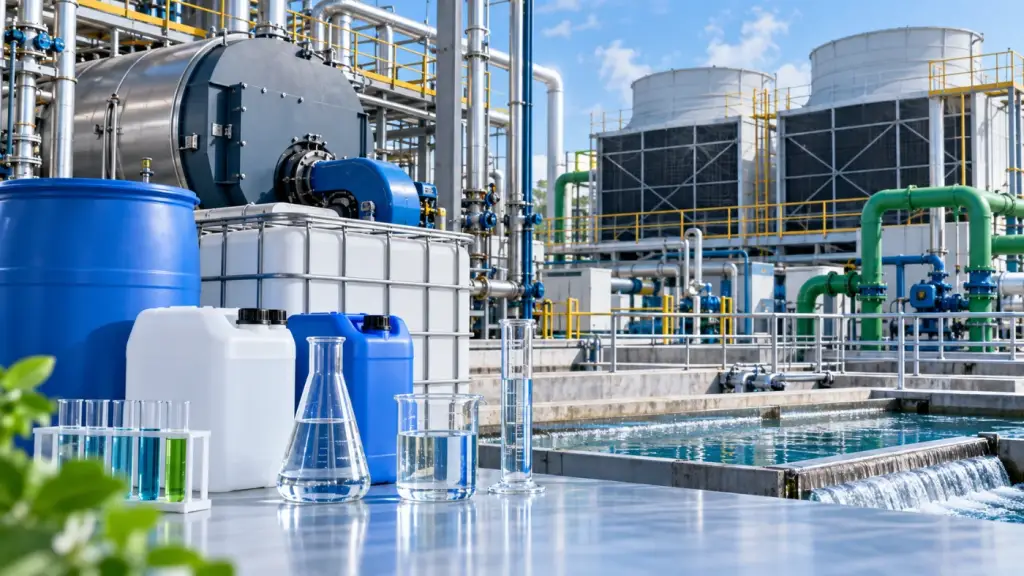
In open systems, evaporation concentrates the salts, raising the risk of scale and corrosion, while bacteria and algae grow in the basin and fill. We use the Aqua-CT 101 scale and corrosion inhibitor together with AquaB1 and AquaB2 biocides in a suitable rotation, and set the cycles of concentration and bleed-off.
Closed loops are less prone to scale but vulnerable to long-term corrosion. We use Aquashield, designed to protect chilled-water circuits.
Problems we solve
Scale reducing heat transfer
Higher fuel and energy use and hotter metal surfaces.
Corrosion in boilers and steam lines
Leaks and failures caused by dissolved oxygen and acidic condensate.
Biofouling in cooling towers
Algae and bacteria clog the fill and cut cooling efficiency.
Corrosion of chiller loops
Pipes and exchangers deteriorate in closed circuits over time.
System & treatment method
Boiler or tower type, feed water and operating conditions.
Inhibitors, dispersants, biocides and condensate products per system.
The right dose and feed method for each product.
Managing concentration in the boiler and tower.
Periodic checks and program adjustment as conditions change.
Applications
Advantages
Our own products
Aqua, Aquasteam, Aquashield and AquaB ranges for every system.
Experience across industries
References in fertilizers, food, pharma, lubricants, mining and packaging.
A complete program, not a single product
Scale, corrosion and biofouling handled together.
Ongoing technical support
Regular follow-up and program adjustment to operating conditions.
Components
Engineering & implementation
We visit the site, review the water source, its analysis and end use, and agree with your team on the problem and the target.
We define the treatment stages, capacity and equipment and submit a clear technical and commercial offer.
We supply the equipment, media and chemicals specified in the design and check them before they ship to site.
We install the unit, connect its piping and control panel, then start it up and tune it until it delivers the target water quality.
We hand the plant over to your operators with hands-on guidance on daily operation and periodic washing.
We follow the plant's performance, supply consumables and spare parts and provide technical support when needed.
Related products
High-efficiency scale and corrosion inhibitor
Advanced polymer-based scale and corrosion inhibitors
Condensate pH treatment and adjustment
Prevents deposit and sludge build-up and improves performance
Effective scale and corrosion inhibitor
Corrosion inhibitor for chilled-water loops
Technical guides
 Technical Guides
Why boilers and cooling towers need a water treatment chemical program: scale, corrosion and biological growth, and the role of scale and corrosion inhibitors, biocides, dosing systems and follow-up.
 Technical Guides
Scale, corrosion and acidic condensate are the main threats to steam boilers. Here is why they happen and what a treatment program needs to protect the boiler and lower its running cost.
FAQ
A softener only removes hardness. The boiler also needs corrosion inhibitors, condensate control and managed blowdown — which the chemical program provides.
Rotating two different biocides helps control different types of micro-organisms and reduces the chance of them adapting to one product.
Yes. A chiller loop is closed and mainly needs corrosion protection; a tower is open and needs scale, corrosion and biofouling control.
With a visit to review the system and take samples, followed by the proposed program, doses and follow-up schedule.
Talk to an engineer
Send your water analysis or describe your current system, and our technical team will come back with a clear, suitable proposal.