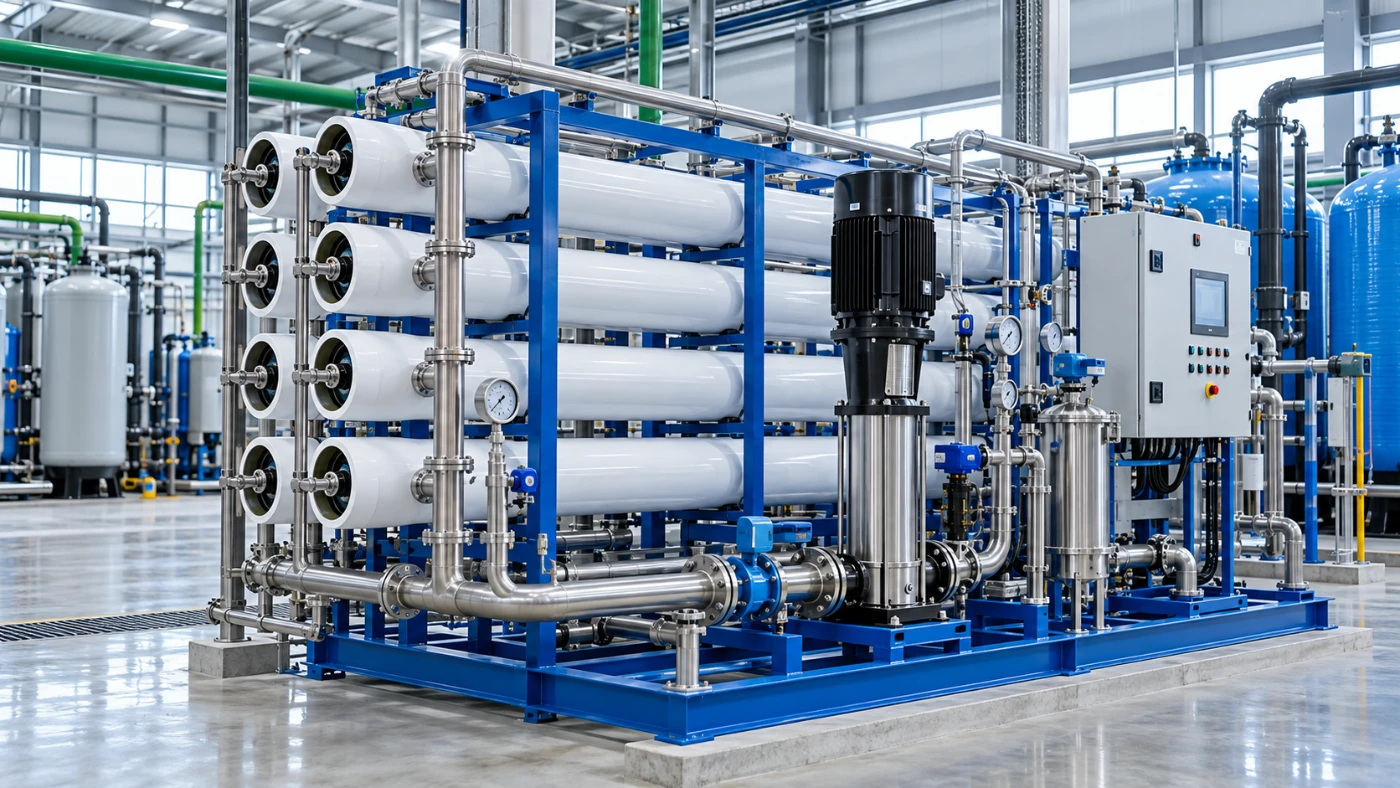
Reverse osmosis (RO) systems are among the most widely used water treatment and desalination technologies in factories and commercial and industrial facilities, especially when dissolved salts must be reduced and the quality of process water improved.
But choosing an RO system should not come down to capacity or price alone. A system designed for mains water of limited salinity is very different from one treating high-salinity well water, even at the same capacity. The right design therefore starts with understanding the raw water and the water quality required after treatment.
Water analysis is the first step in designing an RO system
Before deciding the number of membranes or the size of the pumps, the feed water must be analysed. The analysis shows the salts, hardness and suspended solids, and the elements that can cause scaling or fouling of the membranes.
Key data to consider include:
- Total dissolved solids (TDS) and electrical conductivity.
- Total hardness and pH.
- Iron, manganese and silica.
- Turbidity.
The more accurate the water data, the better the system can be designed and the lower the risk of future failures.
Defining the required water quality
Not every facility needs the same water quality. Water for industrial washing may have different specifications from boiler feed water, and food or pharmaceutical production has different needs from general industrial use.
The required product water quality should therefore be defined before the system is designed: it decides whether one RO pass is enough or more are needed, and whether additional treatment is required before or after reverse osmosis.
Why pre-treatment before the RO membranes matters
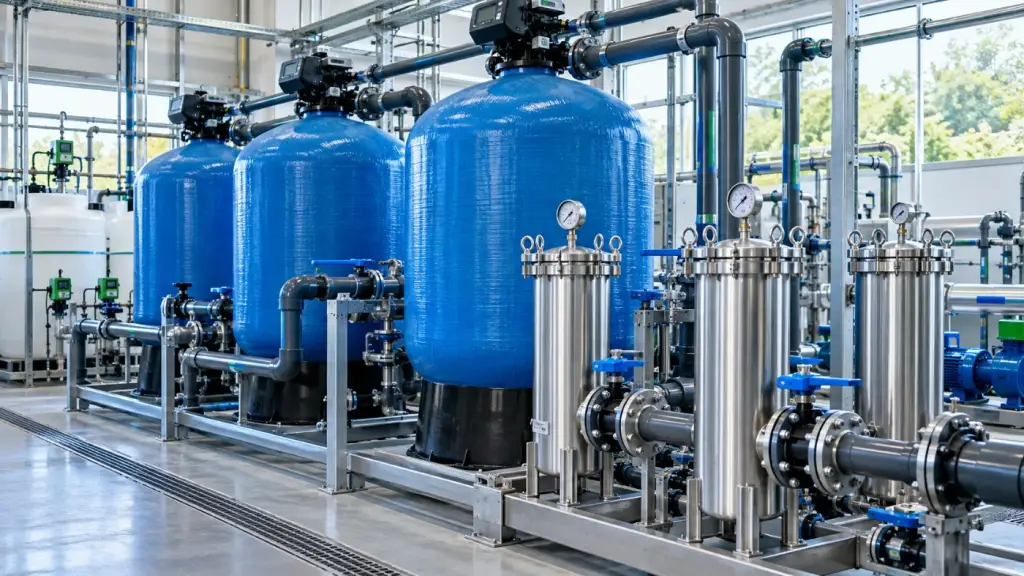
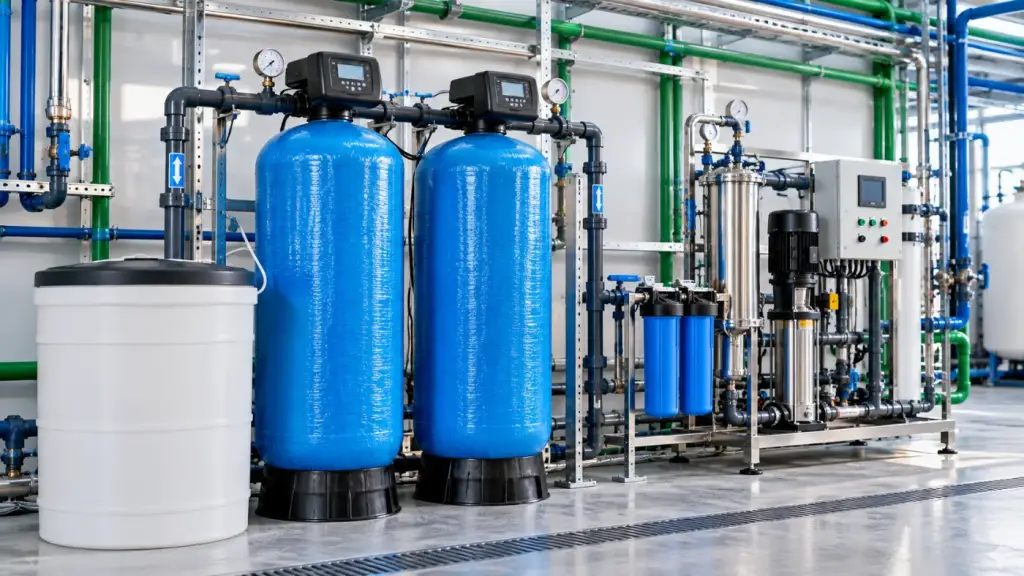
Membrane performance depends heavily on the stages ahead of it. Pre-treatment can include sand and activated carbon filtration systems, water softeners, cartridge filters and chemical dosing systems.
Its purpose is to protect the RO membranes from turbidity, scaling and anything else that affects their performance. Neglecting this stage leads to frequent membrane fouling, lower output and higher maintenance costs.
How is the capacity determined?
An RO system should not be sized on average daily consumption alone. You need to know the operating hours, peak demand, the capacity of the treated-water tanks and the nature of the process that uses the water.
A facility may need 100 cubic metres of water a day, but a system running 20 hours a day is designed differently from one that must deliver the same volume in only 8 hours. Actual water demand must therefore be studied before the system capacity is fixed.
Recovery rate and water consumption
The water entering an RO system is split into treated water (permeate) and a concentrate that carries a higher share of the salts. The ratio of permeate to feed water is the recovery rate.
Raising the recovery without proper study increases the risk of scaling on the membranes, so the right rate is set from the water analysis, the membrane type and the operating conditions — together with the right antiscalant for brackish well water or seawater.
Choosing the reverse osmosis membranes
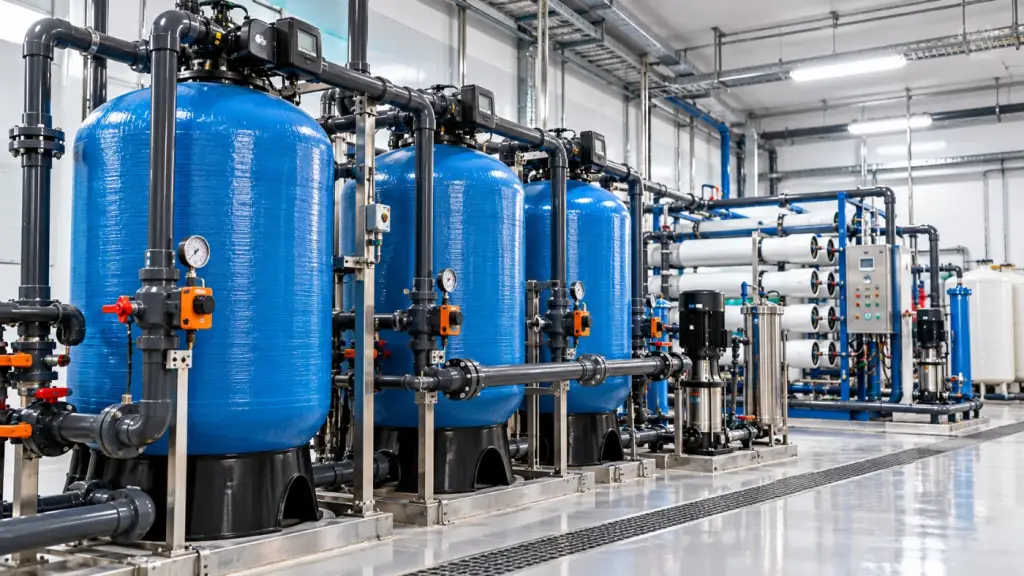
There are several types of RO membrane, and the choice depends on the water and the intended use. Membranes for low- and medium-salinity water differ from those for higher-salinity applications, and the number of membranes and their arrangement follow from the required output and the water quality.
Instrumentation and control
A modern plant should not rely on manual operation alone. Instruments for pressure, flow, conductivity and other indicators help track the plant’s performance and catch problems early, and control systems can protect the pumps and membranes from abnormal operating conditions.
Why routine maintenance matters
Even the best RO system needs a proper maintenance program: checking the filters, monitoring the pressure drop, testing the product water and cleaning the membranes chemically when needed. Preventive maintenance usually costs far less than dealing with damaged membranes or a full plant shutdown.
Is an RO system always the right answer?
Not necessarily. Sometimes all that is needed is hardness removal with a softener; in other cases filtration units are enough. That is why the problem in the water must be identified first, and the technology chosen second.
How Aqua System can help
Aqua System provides complete solutions for the design, supply, installation and commissioning of water treatment and desalination systems, studying each project’s requirements according to the water source, the required water quality and the use. If you are planning a new RO system or upgrading an existing one, the right starting point is a water analysis, your consumption and your operating requirements.
Need to find the right water treatment system for your facility? Contact Aqua System to discuss your project requirements and request a technical proposal.