Hardness is the concentration of calcium and magnesium salts in water. It is not usually a health issue, but it is one of the most common causes of trouble in industrial equipment, because these salts deposit when water is heated or concentrated.
Signs of a hardness problem
- Hard white layers inside boilers, heaters and heat exchangers.
- Lower heating or cooling efficiency and higher fuel use.
- Blocked nozzles and small valves.
- Higher detergent consumption in washing.
Signs alone are not enough: a water analysis measures hardness precisely and compares it with what your use requires.
How does a softener work?
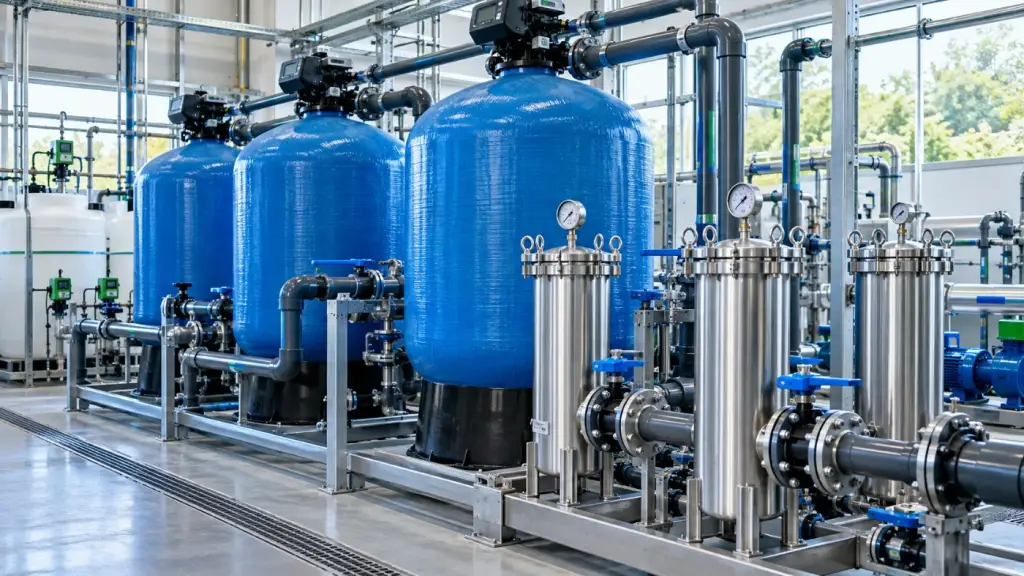
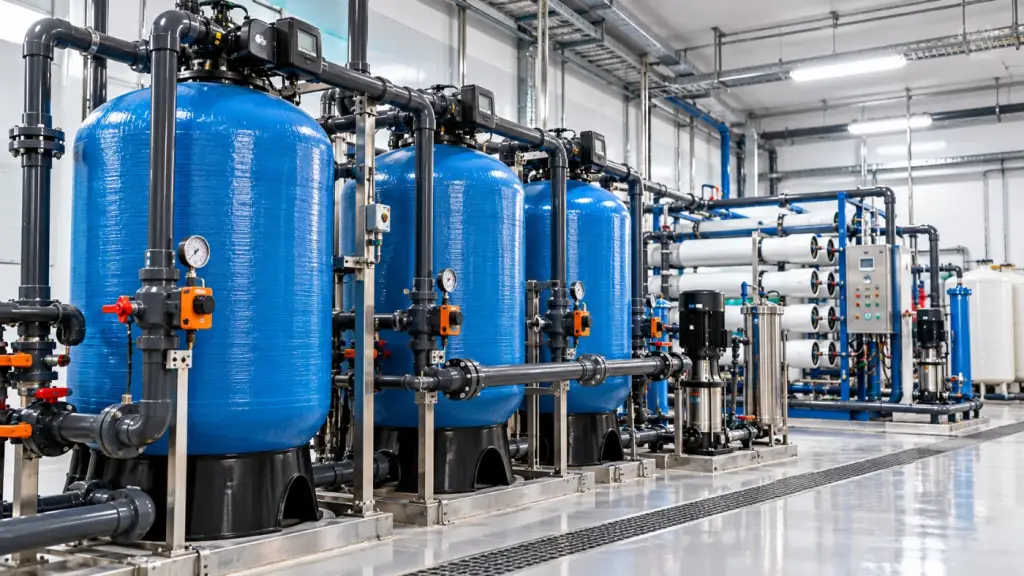
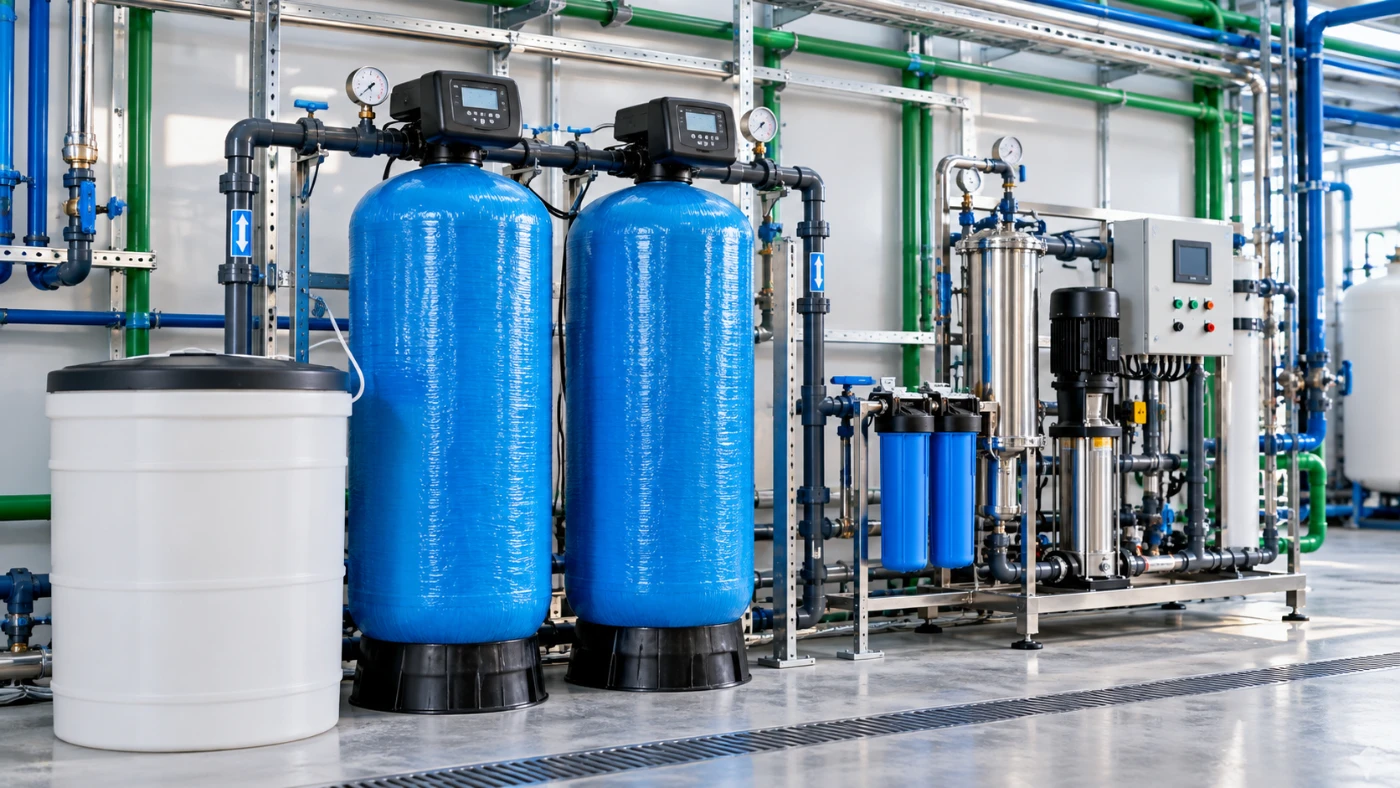
A softener is an ion-exchange unit in which water passes through resin that captures calcium and magnesium and releases sodium in their place. When the resin is exhausted it is regenerated with brine and returns to service. For continuous duty a twin softener is preferred so soft water never stops during regeneration.
When is a softener not enough?
A softener removes hardness but does not reduce total dissolved solids. If the water is highly saline or the process needs demineralised water, the answer may be ion-exchange demineralisation or reverse osmosis. In boilers, a chemical program is still needed to protect against corrosion even with a softener.
Maintenance: resin is not forever
Over time resin loses capacity, especially when exposed to chlorine or iron. Shorter service runs signal that it needs checking, and the answer may be replacing the ion-exchange resin.
Read more about water softener systems, or send us your water analysis and we will suggest the right solution.