Water Test Kits – AquaSol (India)
Total Hardness Water Test Kit
Measures water hardness after the softener and in feedwater
Our services
Routine on-site analysis, test kits, training and follow-up reports for boiler, cooling tower, chiller and RO plant water.
Overview
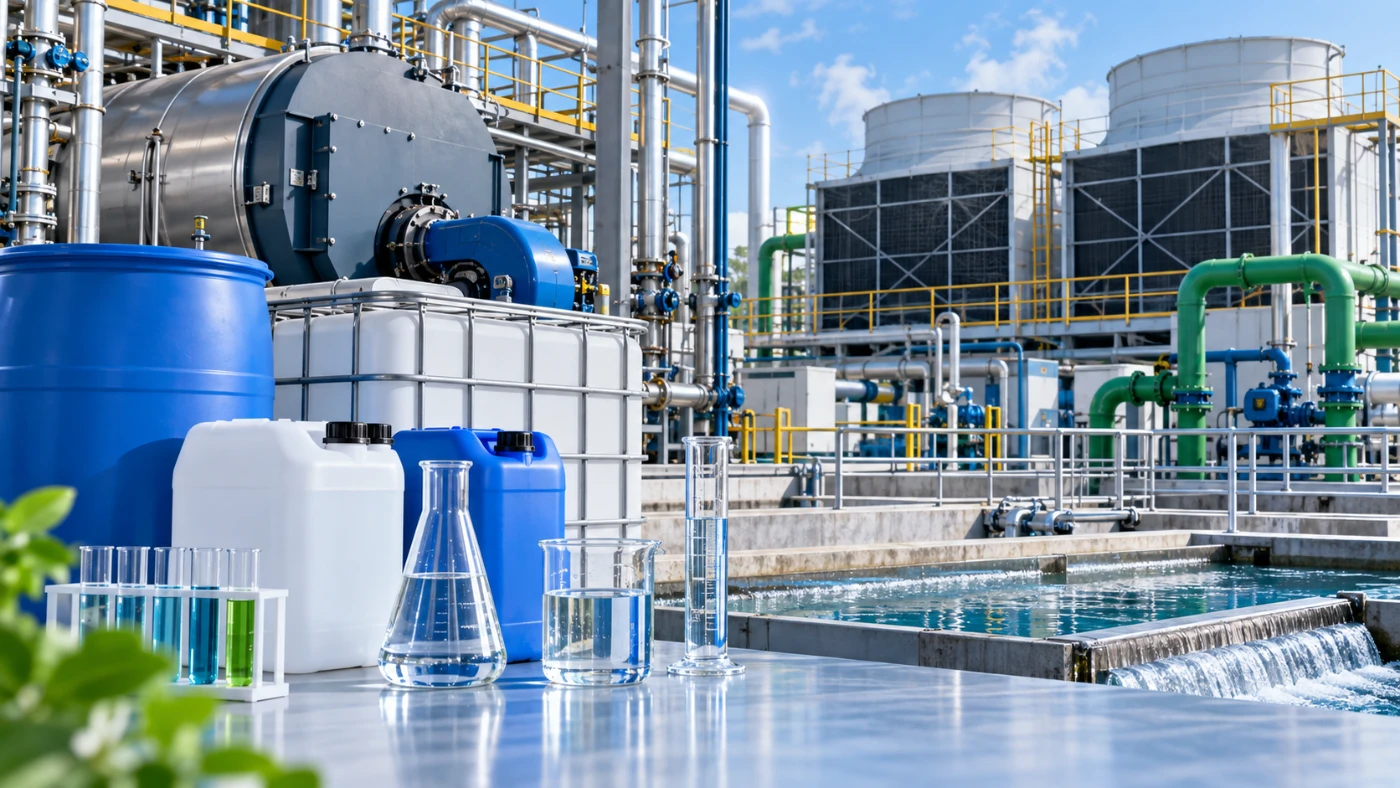
A water treatment program is not complete once the chemicals are delivered. What proves that a boiler, cooling tower or chiller loop is actually protected is routine water analysis: regular readings compared with control limits, on which dosing, blowdown and softener regeneration decisions are based.
At Aqua System, analysis is a core part of the treatment programs we provide: our engineers run on-site tests during service visits, we supply AquaSol (India) water test kits as an authorized distributor, and we train the operating team to take and log the daily readings.
When a case needs measurements that on-site tests do not cover — such as a deposit sample or a detailed ion analysis — we recommend laboratory analysis and help define what should be requested.
Related guides: Boiler, Cooling Tower and Chiller Water Analysis: What to Test and Why and Cooling Tower Cycles of Concentration.
Problems we solve
A chemical program with no measurement
Chemicals are dosed without confirming that readings are within the required limits.
Undetected hardness leakage
A softener needs regeneration or service, and nobody knows until scale appears.
Too much or too little blowdown
Wasted water and chemicals, or concentrated salts that cause scale.
Readings with no log
Results are not recorded, so trends cannot be followed and failures cannot be explained.
System & treatment method
Points that represent feedwater, system water and condensate.
The test list and control limits for each system, set by the treatment program.
Using water test kits and portable meters.
Results are compared with the limits and the cause of any deviation is identified.
Dosing or blowdown is adjusted and a report with readings and recommendations is delivered.
Applications
Advantages
Part of the treatment program
Analysis and chemicals from one party that takes responsibility for the result.
Authorized AquaSol test kit distributor
We supply the kits and help you choose the right one for each system.
Operator training
We train your team on daily readings and correct sampling.
Clear reports
Readings, limits and recommendations you can refer back to and trend.
Components
Engineering & implementation
We review the system and the current treatment program and define sampling points.
We take samples and run the basic readings to establish the current condition.
We define the tests, their frequency and who runs them: the operating team or ours.
We supply the right kits and train the operating team to use them.
Routine analysis, a review of the log, and program adjustments where needed.
Related products
Measures water hardness after the softener and in feedwater
Measures alkalinity in boiler and cooling tower water
Measures chlorides to follow corrosion risk and cycles of concentration
Measures the oxygen scavenger residual in boiler water
FAQ
Our analysis is part of our treatment and monitoring programs. Contact us with a description of your system and we will explain what we can offer in your case.
Test kits are enough for day-to-day operating decisions. Laboratory analysis is needed when designing a new program, diagnosing an unexplained problem or analysing a deposit sample.
Basic boiler readings are daily, cooling towers several times a week, and closed loops monthly to quarterly. The actual frequency is set per system.
Usually hardness, alkalinity, sulphite and phosphate, plus pH and conductivity measurement. We confirm the final list after reviewing the treatment program.
Talk to an engineer
Send your water analysis or describe your current system, and our technical team will come back with a clear, suitable proposal.