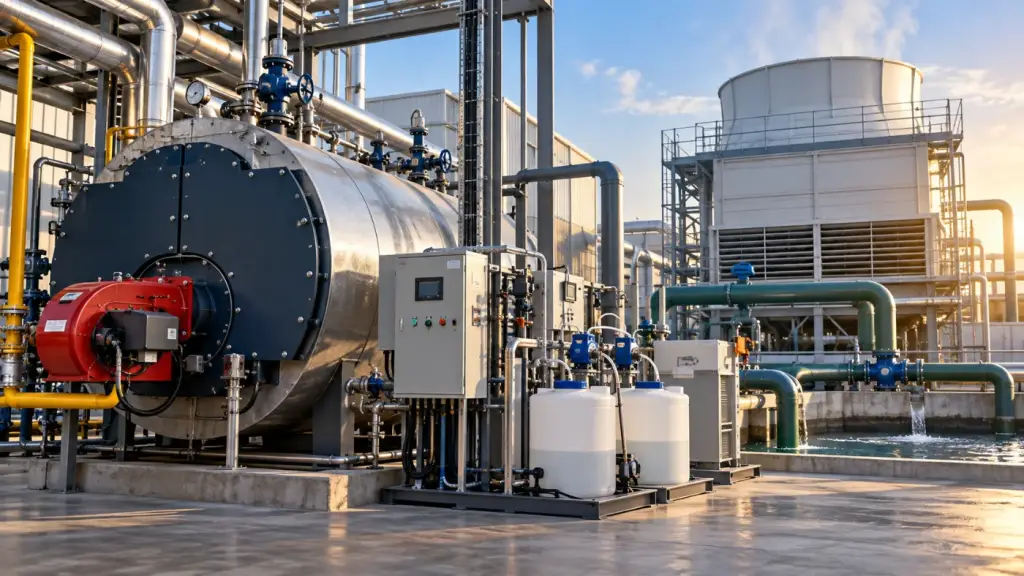
Boiler chemical cleaning is a procedure carried out with the boiler shut down, in which an alkaline solution is circulated to remove oils, then an acid solution with a corrosion inhibitor to dissolve scale and corrosion products from the heating surfaces, followed by rinsing, neutralisation and passivation of the metal. It is needed when deposits build up that hinder heat transfer or threaten the integrity of the tubes, and it is a cure for a problem that could have been prevented by a well-controlled treatment program.
What are the signs that a boiler needs chemical cleaning?
- Higher fuel consumption for the same quantity of steam.
- A flue gas temperature higher than usual.
- A visible layer of scale on internal inspection.
- Local overheating, bulging or leaking of the tubes.
- A history of hardness leakage or of chemical dosing being stopped.
A layer of scale is a thermal insulator: even small thicknesses raise fuel consumption noticeably, and raise the temperature of the tube metal to dangerous limits.
What types of chemical cleaning are there?
| Type | Purpose | When it is done |
|---|---|---|
| Alkaline boil-out | Remove oils, grease and manufacturing residues | Before starting up a new boiler or after major repairs |
| Acid cleaning | Dissolve calcium and magnesium scale and iron oxides | When significant deposits are confirmed |
| Neutralisation and passivation | Neutralise acid residues and form a protective layer on the metal | Immediately after every acid clean |
What solutions are used in acid cleaning?
- Hydrochloric acid with a corrosion inhibitor: the most common for carbonate scale and iron oxides, and lower in cost. It is not used with stainless steel.
- Organic or milder acids (such as citric and sulphamic): gentler on the metal and easier to handle, and suited to sensitive or mixed-metal systems.
- Special solutions for silica deposits or difficult sulphates.
The choice of solution, its concentration and its temperature depend on analysis of a sample of the deposits and on the boiler metals. The corrosion inhibitor is an essential condition: without it the acid attacks the boiler metal itself.
What are the steps of chemical cleaning?
- Inspection and assessment: internal inspection, taking and analysing a deposit sample, and estimating the quantity of deposits.
- Preparation: isolating the boiler, the instruments and the sensitive valves, and connecting a circulation pump, an external tank and vents.
- Alkaline cleaning if oils are present, then rinsing.
- Circulating the acid solution with the inhibitor at the specified concentration and temperature, measuring the acid concentration and the dissolved iron at intervals to identify the end of the reaction.
- Draining and rinsing until the water is close to neutral.
- Neutralisation and passivation with an alkaline solution (such as caustic soda and passivation additives) to prevent rapid rusting of the clean metal.
- Final inspection and manual removal of the loosened deposits, then return to service with the treatment program started immediately.
- Treating the waste solutions by neutralisation before disposal, in line with environmental requirements.
What are the safety precautions?
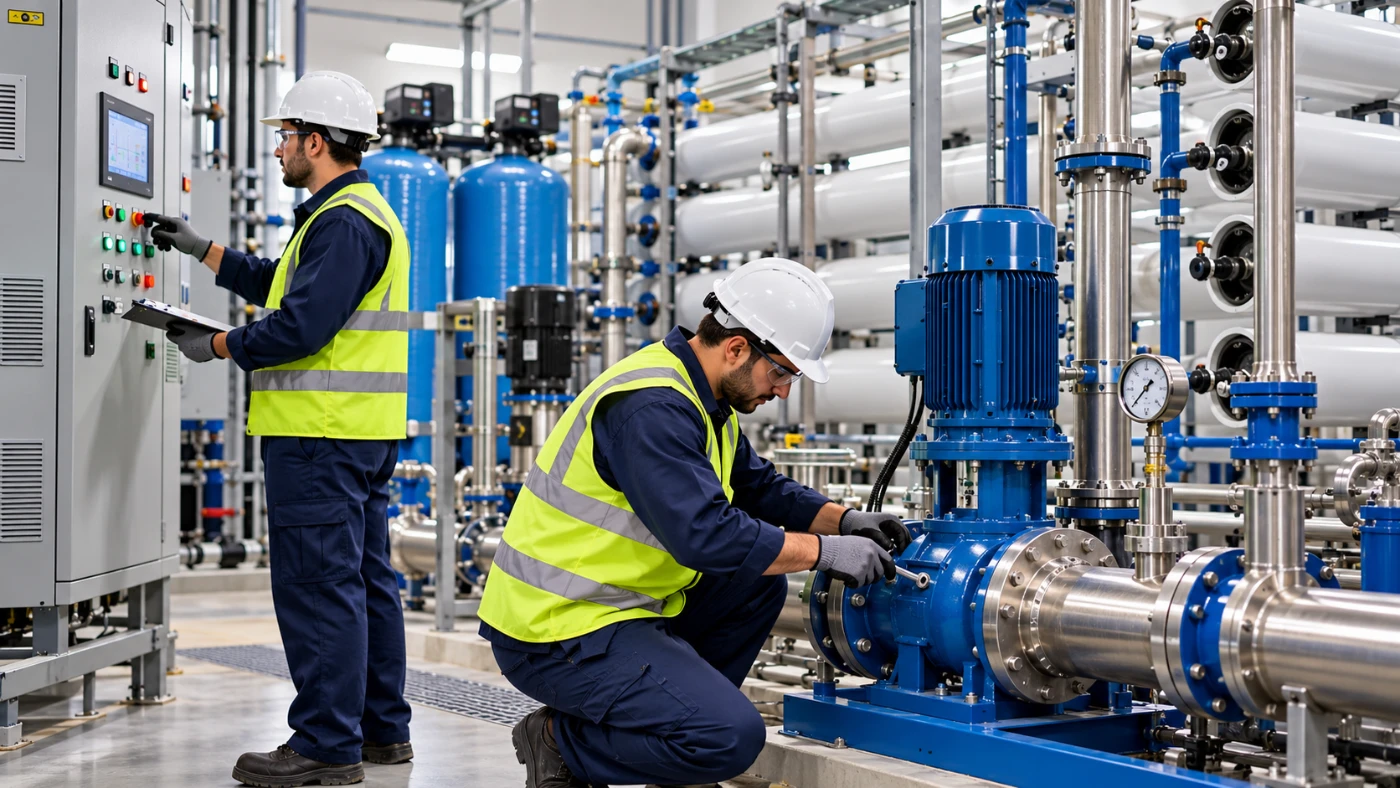
- The reaction of the acid with the metal and the deposits produces gases, including flammable hydrogen: good ventilation and no flame or spark of any kind.
- Full protective equipment for the workers, and emergency washing facilities.
- Not exceeding the specified concentration, temperature and contact time.
- Having the job carried out by a specialist team with a written plan, not improvised by the operating team.
How do you avoid the need for chemical cleaning?
Every acid clean uses up part of the life of the metal, however good the inhibitor. Prevention is cheaper and safer: a softener working efficiently, scale and corrosion inhibitors at a controlled dose, regular blowdown, and routine tests that reveal hardness leakage early.
Boiler chemical cleaning FAQ
How often is a boiler chemically cleaned?
There is no fixed schedule. A boiler with a well-controlled treatment program may not need it for years, and the decision is made by internal inspection and measurement of the deposits.
Does acid cleaning harm the boiler?
If it is carried out with a suitable inhibitor and proper controls, its effect on the metal is limited, but repeating it is undesirable. The real danger lies in non-specialist execution.
Can cleaning be done while the boiler is running?
There are gradual cleaning programs during operation, using dispersants and polymers, for light deposits, but they are slow and not suitable for thick scale.
How long does chemical cleaning take?
From one day to several days depending on the size of the boiler and the quantity and type of the deposits, including preparation, rinsing and passivation.
Summary
Chemical cleaning is an effective cure when it is needed, but the aim is not to need it. Learn about our boiler and cooling tower water treatment service or browse boiler chemicals and industrial chemicals.
Want your system reviewed? Contact the Aqua System technical team and send your water analysis if you have one — we will come back with a suitable solution and a clear quotation.